
Crane Service Members Help Save Injured Bald Eagle
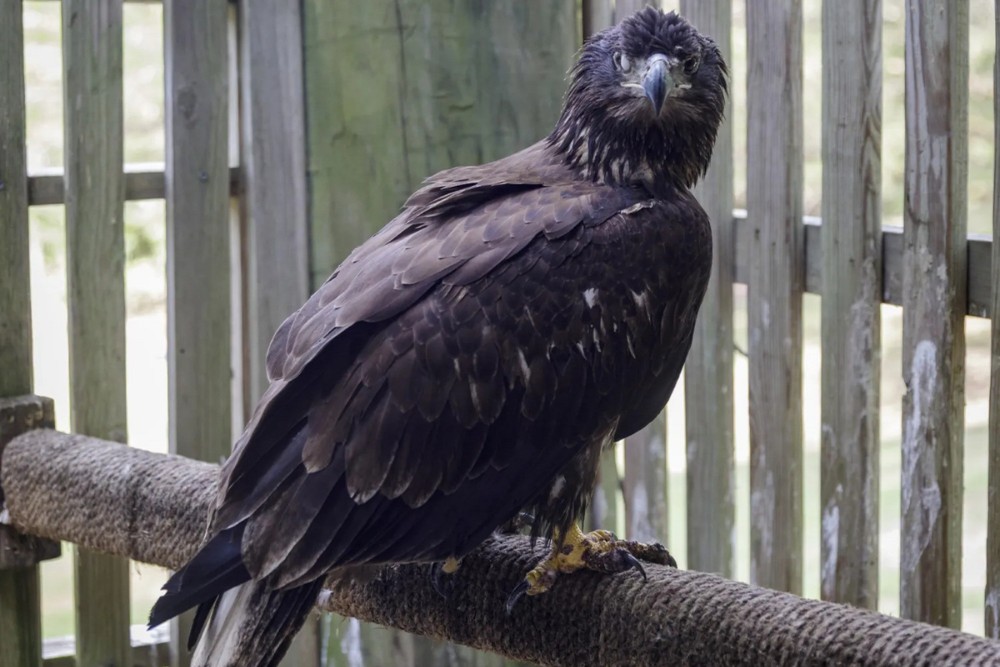
A routine day at Naval Weapons Station Crane took an unexpected turn when two service members noticed an injured bald eagle along a roadway on the installation. Army Staff Sgt. Jonathan Park and Navy Petty Officer 2nd Class Mitchell Brimner were carrying out their normal duties when they encountered the juvenile bird, which was unable to fly and appeared to be in poor condition. The eagle had not yet developed the distinctive white head and tail feathers associated with mature bald eagles, making it clear that it was still young. Park initially stopped to help direct traffic after noticing the large bird near the road, while the service members assessed the situation and determined that the eagle needed assistance. Rather than leaving the bird exposed to passing vehicles and other hazards, they began working to safely contain it. Their response illustrates how service members can become stewards of the environment surrounding military installations, where wildlife and military operations often share large areas of land.
A Careful Rescue Effort Comes Together
Capturing an injured bird as large and powerful as a bald eagle required patience and teamwork. Park and Brimner made several attempts to approach the bird before receiving assistance from personnel within the installation’s environmental office and fellow security staff. The group eventually developed a simple method to safely contain the eagle using a box with ventilation holes. The effort required one person to distract the bird while another approached from behind with the box. Once they were close enough, Brimner was able to place the box over the eagle and secure it for transport. The service members’ efforts were not based on specialized wildlife-rescue equipment but on recognizing that the animal needed immediate help and working carefully to prevent further injury. Their actions also demonstrate the value of cooperation among different teams on a military installation, where environmental personnel, security staff, and service members can come together when an unexpected situation develops.
Rehabilitation Reveals a Serious Illness
After the rescue, the service members were connected with Raptor Rise Rehabilitation Center in Bedford, Indiana. Founder Lola Nicholson responded to the call and traveled to receive the injured eagle. An examination by a veterinarian revealed that the bird was suffering from two strains of avian pox, including a severe form that had affected one of its eyes. The condition caused swelling and foaming around the eye, significantly interfering with the young eagle’s vision. The bird was also severely underweight because its condition had prevented it from hunting normally. These findings showed that the eagle’s inability to fly and weakened condition were symptoms of a larger medical problem. At the rehabilitation center, the bird entered a lengthy recovery process that included medical treatment and quarantine. Its care eventually expanded beyond treating the immediate illness, with rehabilitation staff helping the eagle regain the physical abilities and hunting skills it would need to survive independently in the wild.
From Patient to “Freedom”
The rehabilitation process continued for months as the young eagle recovered from its illness and rebuilt its strength. At Raptor Rise’s 30-acre facility, the bird underwent flight and hunting training designed to prepare it for life outside human care. Once its condition improved sufficiently, the eagle was given the name “Freedom,” a fitting choice connected to both its return to the wild and the military setting where it was originally discovered. The story also carries added significance as the United States approaches its 250th anniversary, giving the name another connection to the nation’s history. For the service members who first encountered the bird, however, the most important outcome was that an animal found helpless beside a road had been given an opportunity to recover. The rehabilitation effort transformed what initially appeared to be a roadside emergency into a months-long conservation success involving military personnel, environmental specialists, veterinary professionals, and wildlife rehabilitators.
A Return to the Wild at Naval Weapons Station Crane
On September 21, Freedom returned to Naval Weapons Station Crane and was released into the wild, bringing the rescue effort full circle. The installation encompasses approximately 64,000 acres, providing extensive protected habitat where wildlife can live with limited human disturbance. The eagle’s release demonstrated the importance of having healthy natural areas surrounding military facilities and the role those lands can play in supporting native wildlife. For Park and Brimner, the encounter began with simply noticing a vulnerable animal and choosing to stop and help. Months later, their decision resulted in the successful return of a young bald eagle to its natural environment. The incident also highlights a less visible dimension of military service: the responsibility to care for the lands, resources, and communities that surround military installations. At Crane, a chance encounter between service members and an injured eagle ultimately became a story of cooperation, rehabilitation, and freedom in the wild.
Don’t miss out on any Navy scoop moving forward! For more Navy League news and updates, click here.
BLUE & GOLD NEWSLETTER
The award-winning Blue & Gold is published monthly. It features hot news, highlights event speakers, covers legislation and much more.
JOIN THE COMMUNITY
The Navy League depends on passionate individuals like you to support
those currently serving and advocate for the sea services.