
Exercise Atlantic Thunder 2026 Demonstrates U.S.-UK Maritime Strike Capabilities
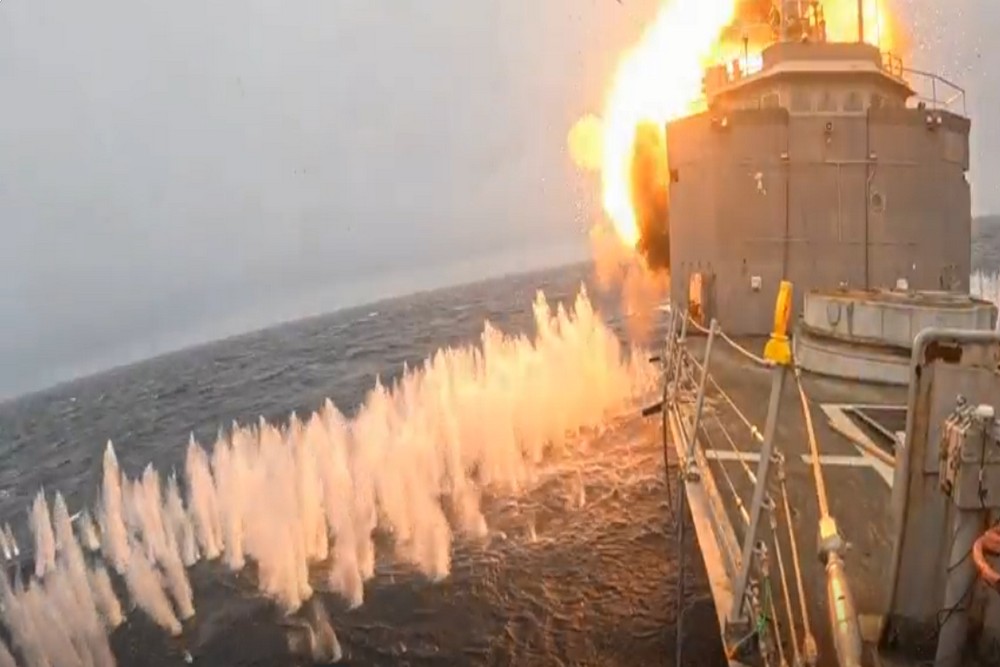
The United States and United Kingdom concluded Exercise Atlantic Thunder 2026 in the North Atlantic on September 25, completing a major joint maritime training event designed to strengthen combined warfighting skills, targeting coordination, and interoperability between the two allies. Led by U.S. 6th Fleet, the exercise brought together American and British ships, aircraft, submarines, and specialized personnel for a multi-domain, multi-axis sinking exercise, or SINKEX. The event centered on the use of a decommissioned U.S. Navy frigate as a realistic maritime target, allowing participating forces to practice detecting, targeting, engaging, and assessing damage against a surface vessel at sea. Units assigned to several U.S. task forces participated alongside the Royal Navy and U.S. Air Force, creating a complex training environment that involved surface, subsurface, and airborne capabilities. The exercise took place in waters associated with the United Kingdom’s Ministry of Defence Hebrides Range, providing an established location for the live-fire portion of the training. Beyond demonstrating individual weapons, Atlantic Thunder was intended to develop the ability of American and British forces to coordinate their actions across multiple platforms and domains. Such training gives crews experience working with allied command-and-control procedures while allowing participating units to evaluate tactics under realistic conditions. The exercise also provided an opportunity to collect technical information that can be studied after the event, making the operation useful not only as a demonstration of current capabilities but also as a source of information for future training, maintenance, and operational planning.
Ex-USS Klakring Becomes the Exercise Target
At the center of the live-fire event was the former USS Klakring (FFG 42), an Oliver Hazard Perry-class guided-missile frigate that served in the U.S. Navy from 1983 until its decommissioning in 2013. After leaving active service, the ship was ultimately prepared for use as a target vessel, giving American and British forces a realistic platform against which to conduct their maritime strike training. Using a former warship in a SINKEX allows participating forces to observe how different weapons affect an actual ship structure rather than relying exclusively on computer simulations or smaller training targets. Before the exercise began, specialized Navy organizations installed sensors aboard the former frigate to record information during the engagement. Naval Surface Warfare Center Carderock and Naval Information Warfare Center Pacific supported the instrumentation effort, allowing technical teams to collect data that could later be used for battle-damage assessment. The information can help determine where and how different systems caused damage and identify equipment failures resulting from individual strikes. That data provides engineers and military planners with another resource for understanding weapon effects and improving future responses. The former frigate was also prepared according to environmental requirements before being used as a target. The Navy states that vessels designated for SINKEX operations undergo extensive cleaning and preparation to comply with applicable environmental regulations. Monitoring was also conducted above and below the water during Atlantic Thunder to reduce potential risks to marine life and the surrounding environment.
Multiple Weapons Create a Multi-Domain Strike
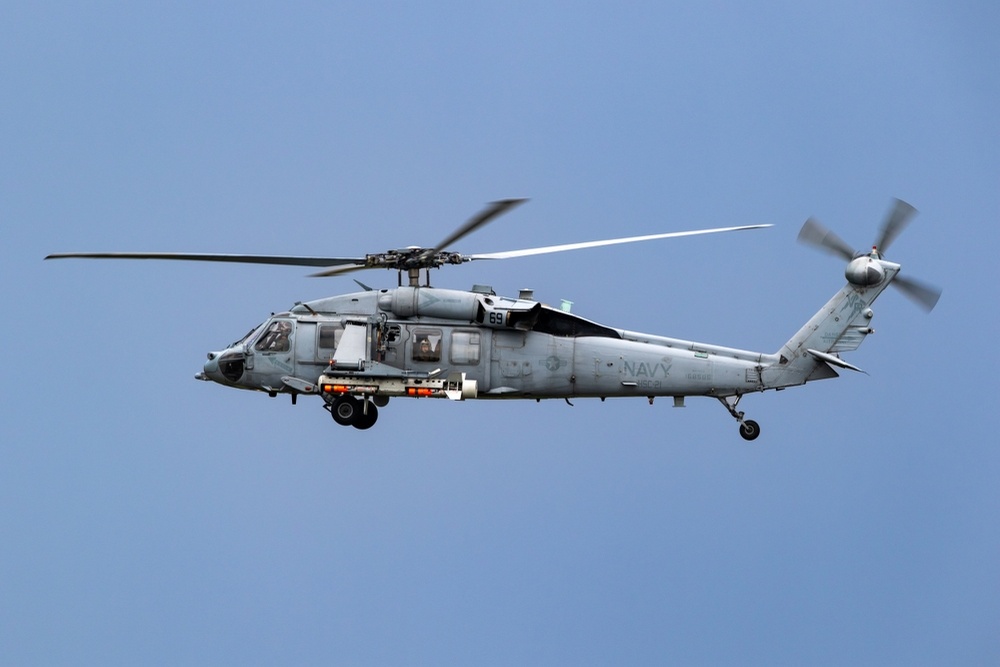
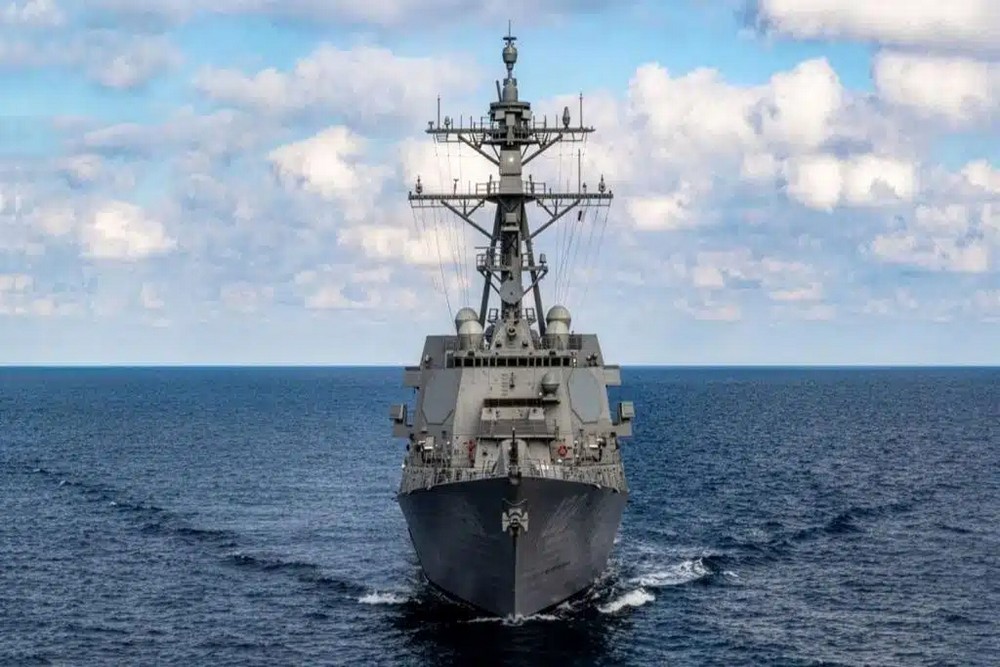
Atlantic Thunder demonstrated how several different weapons and launch platforms can be combined against a single maritime target. The U.S. Navy guided-missile destroyer USS Paul Ignatius (DDG 117) employed the anti-surface variant of the Standard Missile-6, demonstrating the weapon’s ability to contribute to maritime strike operations. The Royal Navy also brought new capabilities into the live-fire scenario. HMS Portland, a Type 23 frigate, launched a Naval Strike Missile, while a Royal Navy Wildcat helicopter operating from the ship fired Sea Venom missiles. The event represented important milestones for the Royal Navy because it marked the first operational firing of an NSM and the first live firing of an operational Sea Venom from a Wildcat against a realistic maritime target. The NSM provides a long-range anti-ship capability and is designed to approach targets at low altitude over the sea, while Sea Venom provides an air-launched maritime strike option. The combination of weapons demonstrated how surface ships and aircraft can contribute different effects during the same engagement. The exercise did not rely solely on surface and airborne systems, however. The Virginia-class submarine USS Massachusetts (SSN 798) also participated and used a Mk 48 Advanced Capability Torpedo against the target. The torpedo delivered the final strike that sank the former Klakring, bringing together weapons launched from surface, air, and underwater platforms during one coordinated exercise.
Royal Navy Reaches New Maritime Strike Milestones
For the Royal Navy, Atlantic Thunder provided an opportunity to demonstrate two weapons that are becoming important elements of its maritime strike capabilities. HMS Portland’s firing of the Naval Strike Missile marked the first operational firing of the system by the Royal Navy. The weapon is intended to provide a modern anti-ship capability and can engage targets at ranges exceeding 100 miles while using a sea-skimming flight profile. The exercise also marked the first live firing of an operational Sea Venom from a Royal Navy Wildcat helicopter against a realistic maritime target. Sea Venom provides a different method of engaging surface vessels by allowing a helicopter to launch an anti-ship weapon while operating from a frigate. Demonstrating both systems during the same exercise gave British personnel an opportunity to evaluate new maritime strike capabilities in an environment involving U.S. ships, aircraft, and a submarine. The live-fire activities also allowed crews to practice the coordination and procedures required when multiple weapons are involved in a maritime engagement. For the United Kingdom, these demonstrations form part of the broader effort to maintain a credible surface-strike capability as its fleet introduces newer weapons and prepares for future maritime requirements. The participation of American forces added another dimension by allowing British units to operate alongside U.S. platforms and personnel during a complex training event. The experience can contribute to greater familiarity between allied forces while providing practical lessons about the integration of different national systems during combined operations.
Air and Subsurface Forces Expand the Training Environment
The exercise extended beyond the ships directly involved in the sinking operation. U.S. Navy and Royal Air Force P-8 maritime patrol aircraft, a Royal Navy Wildcat helicopter, and U.S. Air Force F-15E Strike Eagles were among the aircraft participating in Atlantic Thunder. Their presence helped create a multi-domain environment in which maritime forces could train alongside aviation units. The exercise also included personnel from Explosive Ordnance Disposal Mobile Unit 8, adding specialized expertise to the overall operation. Bringing together these different forces reflects the complexity of modern maritime operations, where information and effects can come from aircraft, surface vessels, submarines, and specialized teams. The ability to coordinate across those domains is particularly important during long-range maritime operations because individual units may not have the same information, sensors, communications systems, or weapons. Training together allows personnel to become more familiar with how allied forces exchange information and coordinate activities. Atlantic Thunder also provided an opportunity to examine how a target can be monitored and assessed throughout an engagement. Sensors installed on Klakring collected information during the strikes, while participating forces could use the resulting data for later analysis. This combination of operational training and technical assessment gives the exercise value beyond the immediate live-fire event. Lessons from the operation can help inform future tactics, training programs, maintenance requirements, and weapons-effects assessments.
Strengthening the U.S.-UK Maritime Partnership
The conclusion of Atlantic Thunder 2026 highlights the continuing importance of close cooperation between the U.S. Navy and Royal Navy as both services prepare for increasingly complex maritime environments. The exercise allowed American and British forces to train together using a broad collection of ships, aircraft, weapons, and underwater capabilities, providing practical experience that cannot be fully replicated through individual-unit training. By conducting live-fire activities against a realistic surface target, participating crews were able to test procedures under conditions that more closely resemble an actual maritime engagement. The event also demonstrated how allied forces can combine capabilities rather than relying on a single ship or weapon system. Surface combatants, aircraft, and submarines each contributed different capabilities to the operation, while technical teams gathered information that can support future analysis. For the U.S. Navy, the exercise reinforced the value of operating with a longstanding maritime ally in a demanding training environment. For the Royal Navy, the event provided opportunities to demonstrate newly introduced maritime strike weapons alongside American forces. Together, the participating units strengthened their familiarity with combined operations and demonstrated the practical value of interoperability. Atlantic Thunder 2026 therefore served as both a live-fire training event and a broader test of allied coordination, bringing together personnel and systems from across the maritime, air, and subsurface domains. As the United States and United Kingdom continue preparing their forces for future operations, exercises such as Atlantic Thunder provide opportunities to refine tactics, develop interoperability, evaluate new capabilities, and maintain the readiness needed for combined maritime missions.
Don’t miss out on any Navy scoop moving forward! For more Navy League news and updates, click here.
BLUE & GOLD NEWSLETTER
The award-winning Blue & Gold is published monthly. It features hot news, highlights event speakers, covers legislation and much more.
JOIN THE COMMUNITY
The Navy League depends on passionate individuals like you to support
those currently serving and advocate for the sea services.